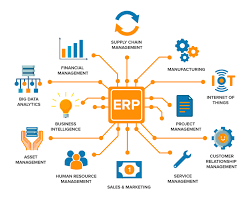
In today’s digital era, Enterprise Resource Planning (ERP) systems have become essential for companies looking to streamline operations, improve visibility, and support long-term growth. However, one of the biggest decisions businesses face is choosing between Cloud ERP and On-Premise ERP.
Both options offer powerful capabilities, but the right choice depends on your company’s size, budget, industry, IT resources, and long-term strategy.
What Is Cloud ERP?
Cloud ERP is an ERP system hosted on the vendor’s servers and accessed through the internet. Instead of installing software on local machines, companies subscribe to the system and use it via a web browser.
Popular Cloud ERP solutions include SAP S/4HANA Cloud, Oracle NetSuite, and Microsoft Dynamics 365.
Key Characteristics of Cloud ERP:
Subscription-based pricing (monthly or annual)
Automatic updates and maintenance
Remote accessibility
Scalable infrastructure
Lower upfront investment
What Is On-Premise ERP?
On-Premise ERP is installed locally on a company’s own servers and managed by its internal IT team. The organization is responsible for hardware, security, updates, and maintenance.
Well-known On-Premise ERP systems include SAP ERP ECC, Oracle E-Business Suite, and Microsoft Dynamics AX (legacy)】.
Key Characteristics of On-Premise ERP:
One-time license purchase
Full control over data and customization
Internal hosting and infrastructure
Higher upfront investment
Manual upgrades and maintenance
Comparing Cloud ERP and On-Premise ERP
1. Cost Structure
Cloud ERP
Lower upfront costs
Predictable subscription fees
Reduced IT infrastructure expenses
On-Premise ERP
High initial investment (hardware + license)
Ongoing maintenance and IT staffing costs
Potential upgrade expenses
👉 Best for tight budgets: Cloud ERP
2. Implementation Time
Cloud ERP
Faster deployment
Pre-configured environments
Minimal hardware setup
On-Premise ERP
Longer implementation time
Requires server installation and configuration
👉 Best for fast implementation: Cloud ERP
3. Customization and Control
Cloud ERP
Limited deep customization
Vendor-managed environment
On-Premise ERP
Highly customizable
Full control over infrastructure and data
👉 Best for complex customization: On-Premise ERP
4. Scalability
Cloud ERP
Easily scalable
Add users or modules quickly
On-Premise ERP
Scaling requires additional hardware and configuration
👉 Best for growing companies: Cloud ERP
5. Security and Compliance
Cloud ERP
Vendor-managed security
Advanced cybersecurity standards
Data stored in external data centers
On-Premise ERP
Full internal control of data
Responsibility for security lies with the company
👉 Best for highly regulated industries: Often On-Premise (depending on compliance requirements)
Advantages and Disadvantages
✅ Advantages of Cloud ERP
Lower upfront cost
Easy remote access
Automatic updates
Reduced IT burden
Faster ROI
❌ Disadvantages of Cloud ERP
Recurring subscription costs
Internet dependency
Limited deep system customization
✅ Advantages of On-Premise ERP
Full data control
Greater customization flexibility
No recurring subscription fees
❌ Disadvantages of On-Premise ERP
High initial investment
Ongoing maintenance responsibility
Slower upgrades
Which One Is Right for Your Company?
Choose Cloud ERP if:
You are a startup or SME
You want lower upfront costs
You need fast deployment
Your team works remotely or in hybrid models
You prefer minimal IT maintenance
Choose On-Premise ERP if:
You require extensive customization
You operate in a highly regulated industry
You have a strong internal IT team
You prefer full data control
Final Thoughts
There is no one-size-fits-all solution. The decision between Cloud ERP and On-Premise ERP depends on your company’s operational needs, financial capacity, compliance requirements, and long-term strategy.
For most modern businesses—especially those undergoing digital transformation—Cloud ERP is becoming the preferred choice due to its flexibility, scalability, and lower upfront investment. However, companies with complex legacy systems or strict regulatory requirements may still benefit from an On-Premise ERP model.
Before making a decision, conduct a detailed needs assessment, evaluate total cost of ownership (TCO), and consult with ERP vendors to ensure the system aligns with your business goals.