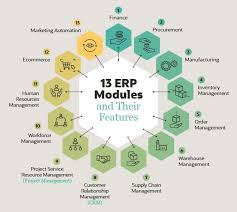
In today’s fast-moving digital economy, businesses need more than just basic accounting tools. Modern Enterprise Resource Planning (ERP) systems have evolved into comprehensive platforms that integrate finance, operations, human resources, supply chain, and customer management into one unified system. Choosing the right ERP software can significantly impact your company’s efficiency, scalability, and long-term growth.
Here are the key features you should look for in modern ERP software.
1. Cloud-Based Architecture
One of the most important features of modern ERP systems is cloud deployment. Cloud-based ERP offers flexibility, remote access, automatic updates, and lower upfront infrastructure costs. Businesses can access data anytime and anywhere, making it ideal for hybrid and remote work environments.
Cloud ERP also ensures better scalability, allowing companies to easily add users or modules as they grow.
2. Real-Time Data and Analytics
Modern ERP software should provide real-time reporting and dashboards. Decision-makers need instant access to financial data, inventory levels, sales performance, and operational metrics.
Advanced analytics powered by AI and machine learning help businesses:
Forecast demand
Identify trends
Reduce operational risks
Improve strategic planning
Real-time insights allow companies to respond quickly to market changes.
3. Modular and Scalable Design
A good ERP system offers modular functionality. Instead of implementing everything at once, companies can start with core modules such as finance or inventory, then expand to HR, CRM, procurement, or manufacturing.
Scalability ensures the system grows with your business without requiring a complete replacement in the future.
4. Integration Capabilities
Modern businesses use multiple software tools such as CRM systems, e-commerce platforms, payroll software, and business intelligence tools. Your ERP must integrate seamlessly with these applications through APIs or built-in connectors.
Strong integration reduces data silos and ensures consistent information across all departments.
5. Automation and Workflow Management
Automation is a core feature of modern ERP systems. Tasks such as invoice processing, purchase approvals, payroll calculations, and inventory updates can be automated to reduce manual work and errors.
Workflow management tools allow businesses to define approval hierarchies, assign responsibilities, and track progress efficiently.
6. User-Friendly Interface
Complex systems often fail because employees find them difficult to use. A modern ERP should have an intuitive dashboard, customizable views, and simple navigation.
Mobile-friendly access is also essential, allowing employees to work efficiently from smartphones or tablets.
7. Strong Security and Compliance
Data security is critical. ERP systems manage sensitive financial, employee, and customer data. Modern ERP software should provide:
Role-based access control
Data encryption
Multi-factor authentication
Compliance with international regulations
Security features protect businesses from cyber threats and regulatory penalties.
8. Customization and Flexibility
Every business has unique processes. A modern ERP should allow customization without excessive coding. Custom workflows, reports, and dashboards help companies adapt the system to their operational needs.
However, it is important to balance customization with system stability and upgrade compatibility.
9. Supply Chain and Inventory Management
For companies involved in manufacturing, retail, or distribution, advanced inventory and supply chain management is essential. Modern ERP systems provide:
Real-time stock tracking
Demand forecasting
Supplier management
Warehouse management integration
These features help reduce stockouts and optimize inventory costs.
10. Artificial Intelligence and Automation
The latest ERP solutions integrate AI capabilities such as predictive analytics, automated recommendations, chatbots, and anomaly detection.
AI-driven ERP systems help improve decision-making accuracy and operational efficiency.