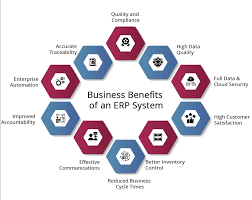
In today’s fast-changing business environment, digital transformation is no longer optional—it is essential for survival and growth. Companies across industries are investing in technology to streamline operations, improve customer experiences, and gain real-time insights for better decision-making. At the center of many successful digital transformation initiatives is Enterprise Resource Planning (ERP) software.
ERP systems serve as the backbone of digital operations by integrating business processes, centralizing data, and enabling automation. This article explores the critical role ERP software plays in shaping and supporting a comprehensive digital transformation strategy.
Understanding Digital Transformation
Digital transformation refers to the integration of digital technologies into all areas of a business, fundamentally changing how organizations operate and deliver value to customers. It goes beyond adopting new software—it requires a shift in mindset, processes, and organizational culture.
Key objectives of digital transformation include:
Improving operational efficiency
Enhancing customer experience
Enabling data-driven decision-making
Increasing agility and scalability
Reducing operational costs
To achieve these goals, businesses need a strong technological foundation—and that is where ERP systems come in.
ERP as the Core of Digital Transformation
ERP software integrates core business functions such as finance, human resources, supply chain, procurement, manufacturing, and sales into a single unified system. Instead of operating in silos, departments share a centralized database that ensures consistency and transparency across the organization.
Here’s how ERP supports digital transformation:
1. Centralized and Real-Time Data
Digital transformation relies heavily on accurate and accessible data. ERP systems provide a single source of truth by consolidating information from multiple departments into one platform.
With real-time dashboards and reporting tools, decision-makers can:
Monitor key performance indicators (KPIs)
Track financial performance
Analyze operational efficiency
Forecast future trends
This data visibility enables faster and smarter strategic decisions.
2. Process Automation and Efficiency
Manual processes slow down productivity and increase the risk of human error. ERP software automates repetitive tasks such as:
Invoice processing
Payroll management
Inventory tracking
Order fulfillment
Automation not only reduces operational costs but also allows employees to focus on higher-value strategic activities. This efficiency is a cornerstone of digital transformation.
3. Improved Collaboration Across Departments
Digital transformation requires cross-functional collaboration. ERP systems eliminate data silos by connecting departments within a unified platform.
For example:
Finance can instantly access sales data.
HR can align workforce planning with production needs.
Supply chain teams can coordinate with procurement in real time.
This integrated approach improves communication, transparency, and overall organizational alignment.
4. Scalability and Business Agility
Modern ERP solutions—especially cloud-based systems—allow businesses to scale operations quickly. As organizations grow, expand into new markets, or launch new products, ERP systems adapt to evolving needs.
Cloud ERP platforms such as SAP, Oracle, and Microsoft offer flexible modules that support expansion without requiring major infrastructure changes.
Scalability ensures that digital transformation efforts remain sustainable in the long term.
5. Enhanced Customer Experience
Customer expectations are higher than ever. ERP systems integrate customer data with operational workflows, allowing businesses to:
Improve order accuracy
Speed up delivery times
Provide better customer support
Personalize services
When ERP is integrated with CRM and e-commerce systems, organizations gain a 360-degree view of customers—leading to stronger relationships and increased loyalty.
6. Data-Driven Innovation
Digital transformation is not only about efficiency—it is also about innovation. ERP systems equipped with analytics, AI, and machine learning capabilities enable predictive insights.
Businesses can:
Identify market trends
Optimize inventory levels
Predict maintenance needs
Reduce financial risks
These insights empower organizations to innovate confidently and stay ahead of competitors.
Challenges of Using ERP in Digital Transformation
While ERP plays a vital role, implementation is not without challenges:
High initial investment
Resistance to change
Complex integration with legacy systems
Need for employee training
To overcome these challenges, companies must align ERP implementation with their overall digital transformation roadmap and ensure strong leadership support.
Best Practices for Aligning ERP with Digital Strategy
To maximize ERP’s impact in digital transformation, organizations should:
Define clear business objectives before implementation.
Choose scalable and cloud-ready solutions.
Involve stakeholders across departments.
Invest in change management and training.
Continuously evaluate and optimize system performance.
ERP should not be viewed as just an IT project—it is a strategic business initiative.