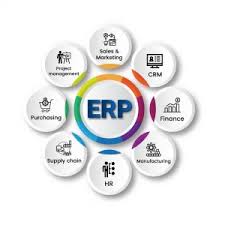
In today’s competitive and fast-changing business environment, growth brings both opportunity and complexity. As companies expand, they often struggle with disconnected systems, manual processes, data duplication, and limited visibility across departments. This is where Enterprise Resource Planning (ERP) software becomes a strategic investment rather than just an operational tool.
Implementing ERP software can transform how growing businesses operate, compete, and scale. Below are the top benefits of implementing ERP software for expanding organizations.
1. Centralized Data and Improved Accuracy
One of the biggest challenges growing businesses face is fragmented data stored in multiple systems or spreadsheets. ERP software integrates core business functions—finance, sales, inventory, human resources, procurement—into a single unified platform.
With centralized data:
Information is updated in real time
Errors caused by manual entry are reduced
Departments work with consistent and accurate data
This leads to better coordination and fewer costly mistakes.
2. Enhanced Operational Efficiency
Manual processes and disconnected tools slow down business operations. ERP systems automate routine tasks such as invoicing, payroll processing, inventory updates, and reporting.
Automation helps businesses:
Reduce administrative workload
Minimize human error
Speed up transaction processing
Improve overall productivity
As a result, employees can focus on higher-value activities like strategy, customer service, and innovation.
3. Better Decision-Making with Real-Time Insights
Growing businesses need timely and accurate information to make strategic decisions. ERP software provides real-time dashboards, analytics, and customizable reports.
With ERP analytics, companies can:
Monitor sales performance
Track cash flow
Analyze customer trends
Identify operational bottlenecks
Access to reliable data empowers leadership to make informed decisions quickly and confidently.
4. Scalability for Business Growth
As a company grows, its processes become more complex. ERP systems are designed to scale with business expansion.
Whether opening new branches, adding product lines, or entering new markets, ERP software can:
Support increased transaction volumes
Manage multi-location operations
Handle multi-currency and multi-language requirements
This scalability ensures the system continues to support growth without constant system changes.
5. Improved Financial Management and Compliance
Financial control becomes more critical as revenue increases. ERP systems streamline accounting processes and provide accurate financial reporting.
Key benefits include:
Automated bookkeeping
Real-time financial statements
Better budgeting and forecasting
Tax and regulatory compliance support
With improved financial visibility, businesses can maintain healthy cash flow and meet compliance requirements more easily.
6. Streamlined Supply Chain and Inventory Management
For product-based businesses, managing inventory efficiently is essential. ERP software helps track inventory levels, orders, shipments, and supplier performance in real time.
Benefits include:
Reduced stock shortages and overstocking
Better demand forecasting
Faster order fulfillment
Improved supplier coordination
This leads to lower operational costs and higher customer satisfaction.
7. Stronger Customer Relationship Management
Many ERP systems include integrated CRM (Customer Relationship Management) features. This allows businesses to manage customer data, sales pipelines, and service history in one system.
With integrated customer data:
Sales teams can respond faster
Marketing campaigns become more targeted
Customer service improves
Retention rates increase
A better customer experience supports sustainable long-term growth.
8. Increased Collaboration Across Departments
When departments use separate systems, communication gaps often arise. ERP software creates a unified environment where all teams work with the same data.
For example:
Sales can check inventory instantly
Finance can view real-time sales data
HR can align workforce planning with business growth
This improved collaboration reduces delays and enhances organizational alignment.
9. Reduced IT Complexity
Instead of managing multiple standalone software solutions, ERP consolidates core business functions into a single integrated system.
This reduces:
Software compatibility issues
Maintenance costs
Data synchronization problems
Cloud-based ERP solutions also minimize infrastructure requirements and offer automatic updates.
10. Competitive Advantage
Ultimately, ERP software gives growing businesses a strong competitive edge. With streamlined operations, better data visibility, and improved customer service, companies can respond faster to market changes.
Organizations that leverage ERP effectively can:
Adapt quickly to demand shifts
Launch new products faster
Improve profitability
Scale sustainably